
Aura-digitalCall (405) 487-1650

Fence Repair in Edmond, OK

Fence Repair That Holds Up in Edmond

Aura-digital resets leaning posts, replaces broken boards, and squares up stubborn gates on wood, vinyl, chain link, and iron fences across Edmond. Free written estimates, most repairs in one visit.

Fence repair in Edmond, OK

Fence Care Notes

Practical write-ups on fence materials, repairs, and upkeep for Edmond homeowners.

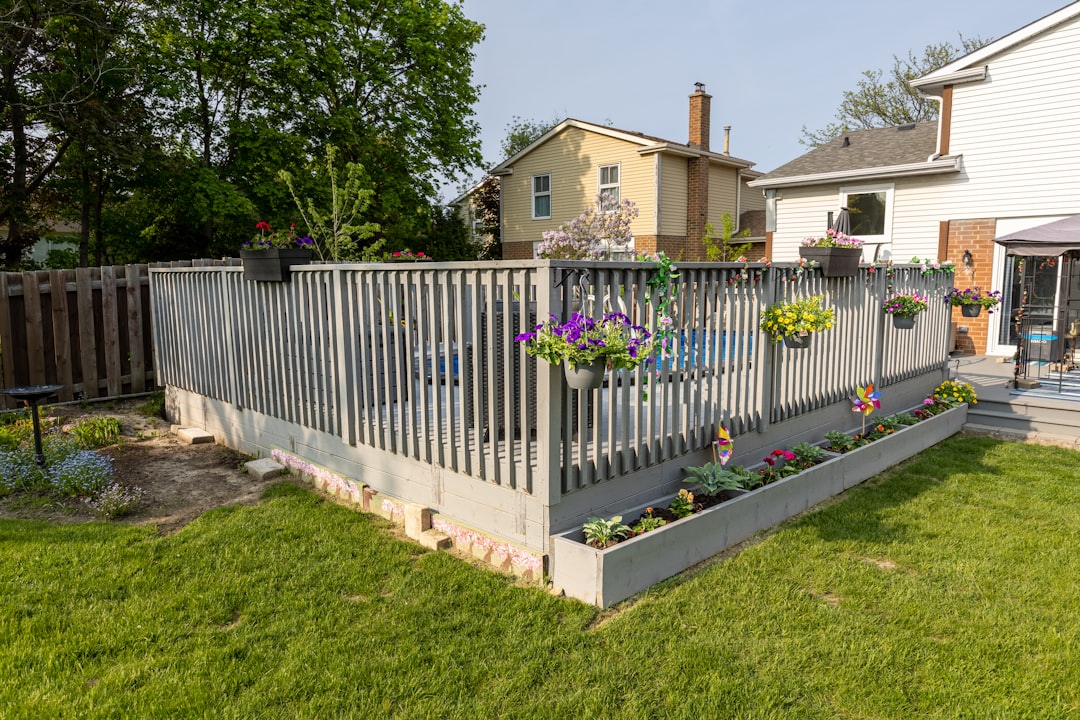
Pool Barrier Code and the Wrought Iron Fence Repair It Demands

A serene sunset viewed through a rustic wooden fence in Aveiro, Portugal, showcasing warm tones in Edmond, OK

Most fences are judged on how they look. A pool barrier is judged on a set of dimensions, and a fence that is beautiful, structurally perfect and one inch wrong somewhere is a fence that fails inspection and, far more importantly, does not do the job it was installed to do.

Ornamental iron is the most common material for pool enclosures because it satisfies the requirements almost by accident. It is non climbable when the pickets are vertical, it does not rot, it does not provide a foothold, and it does not block the view of the water, which matters more than any other single factor in supervision. But the details still have to be right, and the details are where existing fences most often drift out of compliance over time.

That drift is the reason anyone shopping for Edmond fence repair services around a pool should treat the compliance check as part of the scope rather than as an extra. A repair that restores appearance without restoring the dimensions leaves the barrier failing in exactly the way it was already failing, and it does so behind fresh paint, which makes it harder to notice rather than easier.

The dimensions that get checked

Residential pool barrier requirements come from a model code adopted with local amendments, so the exact figures should always be confirmed with the authority that will inspect the work. The pattern below is what the widely adopted residential provisions call for and what most inspectors will be looking at.

Barrier height, measured on the side away from the pool, is generally required to be at least forty eight inches. Some jurisdictions and many homeowner associations require sixty. The measurement is taken from the finished grade, which means a barrier that is tall enough over a lawn can be short where a retaining wall, a planter or a stacked woodpile raises the ground next to it.

The gap beneath the barrier is limited, commonly to two inches measured from grade to the bottom of the barrier. On a hard surface it is often tighter. This is the requirement that soil movement and erosion quietly break, because the fence has not changed but the ground under it has washed out.

Openings in the barrier must be small enough that a sphere of four inches cannot pass. For vertical picket fencing that translates to a maximum clear spacing of just under four inches between pickets, and it applies everywhere, including the triangular gap that appears where a fence steps down a slope and the space between the last picket and a post or a house wall.

Horizontal members are the detail people miss. If there are horizontal rails on the outside face spaced less than about forty five inches apart, they form a ladder, and the code responds by tightening the allowable picket spacing dramatically. This is why quality pool fencing puts the rails on the pool side and keeps the outside face clean.

Gates are held to a higher standard

Every requirement that applies to the fence applies to the gate, and then several more apply on top.

A pool gate must be self closing from any position, including barely ajar. Spring hinges that close the gate from wide open but leave it resting on the latch when pushed lightly are not compliant, and they are the single most common defect found on existing installations.

It must be self latching. The latch has to engage on its own when the gate closes, without anyone touching it. A gate that closes but bounces off the strike and sits an inch open is a failed barrier.

The latch release has to be positioned out of easy reach of a small child, which usually means at least fifty four inches above grade, or mounted on the pool side of the gate with a shielded opening.

And the gate must swing outward, away from the pool. A gate that swings toward the water can be pushed open by a child leaning on it, while an outward swinging gate resists that.

None of this is optional and none of it is expensive. It is a specific hinge, a specific latch and a specific swing direction.

How compliant fences quietly become non compliant

This is the part that catches homeowners who did everything correctly at installation.

Grade changes. A new patio, a raised bed, a load of mulch or five years of soil accumulating against the fence line reduces the effective height. Barriers lose compliance from underneath.

Erosion. The reverse problem. Water running along the fence line scours out the soil and the two inch gap becomes five, which is enough for a small child to slide under.

Furniture and storage. A compliant barrier with a bench, a cooler, a planter or an air conditioning unit placed against the outside face has an integrated climbing aid. Codes address this by requiring clear space, and inspectors do look.

Post settlement and lean. A leaning fence changes both its measured height and its picket spacing at the top, since pickets fanned by a rotating post spread wider apart.

Hardware fatigue. Spring hinges lose tension. Latches wear until they need a nudge. A gate that has developed a quarter inch of sag no longer aligns with its strike, and the homeowner starts propping it open because it is annoying to close.

Every one of these is gradual, which is what makes them dangerous. Nobody stands at a window one afternoon and notices that the barrier has become non compliant. The change happens across seasons, in inches, and the household adapts to it without registering that anything moved.

The inspection anyone can run in ten minutes

Take a tape measure and a rigid four inch object.

Walk the entire barrier and measure the height at intervals, particularly anywhere the ground level differs from the majority of the run.

Measure the gap underneath at the low points, not at the high points.

Pass the four inch object between pickets at several places along the run, including near posts and at any point where the fence steps or transitions to another material or to a wall.

Open each gate to several different positions, including a few inches ajar, release it and watch. It should close and latch every time without help.

Try the latch from the outside at a child’s height and see whether it can be reached.

Walk the outside face and note anything that could be climbed, including permanent features that were not there originally.

Check where the barrier meets the house, a shed or a neighbor’s fence. Junctions are where gaps live.

What repair work usually involves

Restoring an existing enclosure to compliance is mostly small work.

Adding pickets to reduce spacing on a run that has spread, or fabricating an infill panel for a gap at a wall junction.

Extending the barrier downward with a bottom infill where erosion has opened the base, which is cleaner than trying to build the ground back up.

Adding height, either with a top extension welded to existing posts or by resetting posts, depending on how much is needed and how the original was built.

Replacing gate hardware with self closing hinges and a proper self latching mechanism at the correct height, and correcting swing direction if it opens the wrong way.

Straightening or resetting leaning posts, which fixes height, spacing and gate alignment in one operation.

Relocating a rail from the outside face to the pool side, on the rare fence where that is the defect.

Why this is worth doing properly

A pool barrier is one of the very few things in a yard where the consequence of a small dimensional error is not cosmetic and not financial. Drowning is fast, quiet and, in the overwhelming majority of incidents involving small children at residential pools, happens during a brief lapse in supervision rather than during swimming.

The barrier exists to cover that lapse. Every requirement in the list above traces back to a documented way children have gotten through barriers that adults believed were secure: under, through, over, or through a gate that did not close.

The fence does not need to be perfect. It needs to be four dimensions correct and one gate that always closes.
Read the full article

How Each Fence Material Ages in Edmond, and When to Step In

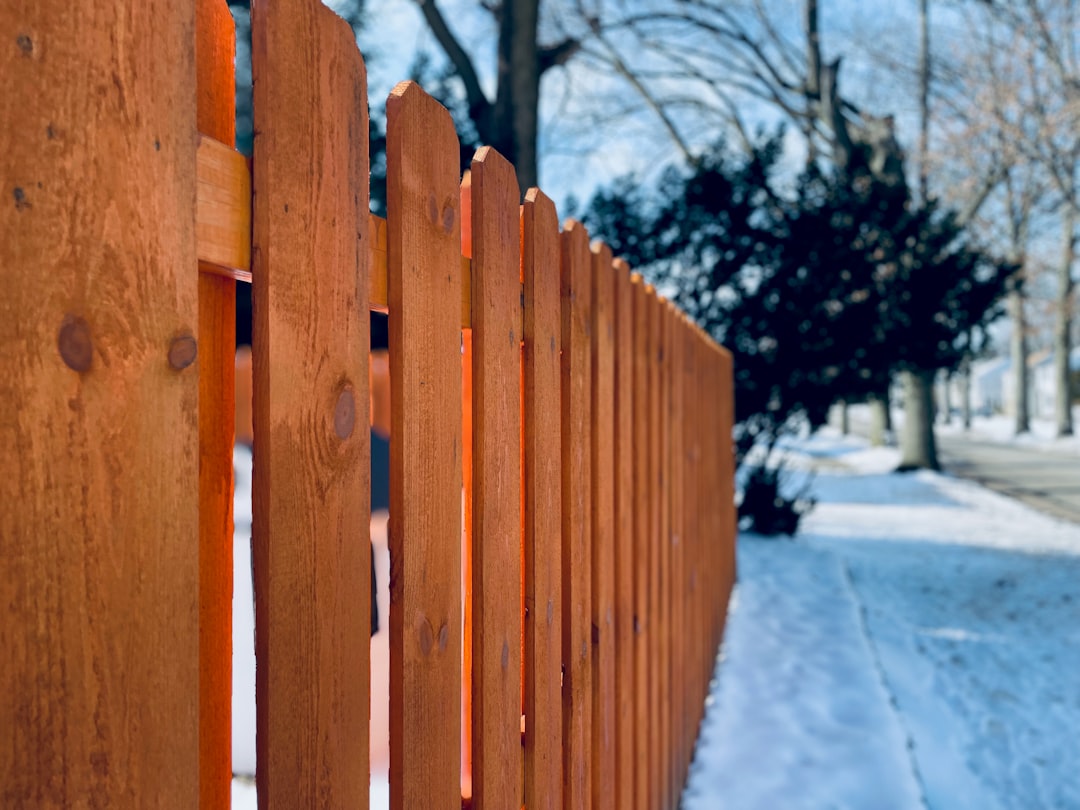
Weathered wood and chain link fence in Edmond, OK

Every fence in Edmond is on a clock, and the clock runs faster here than in a mild climate. Red clay, hard sun, and the occasional January ice load all take a toll. The good news is that each material tells you it is failing well before it comes down, if you know what to look for. Here is how the four common types age, and the moment to call for help.

Wood: Watch the Base of the Posts

A cedar or pine fence almost always fails from the ground up. Sun and rain gray the boards first, which is cosmetic, but the real story is at the bottom of each post where moisture from the clay softens the wood. Grab a post and give it a firm push. If the top moves more than an inch or you see dark, spongy wood at grade, the footing is going. Caught early, that is a single post reset. Left alone, it drags the panels down with it.

Vinyl: Look for Cracks and Popped Rails

Vinyl looks bulletproof until a cold snap makes it brittle. A stray rock from the mower or a hard bump in December can split a panel or knock a rail loose from its bracket. Walk the line in good light and check where the rails meet the posts. A single cracked section is a quick swap, and replacing it early keeps the damage from spreading to neighboring panels.

Chain link sags long before it breaks. Push on the fabric near the bottom. If it flexes out several inches or you can see daylight opening under it, the tension wire and top rail have gone slack. That is the point to act, because a loose fence puts strain on every post along the run. Our chain link fence repair work resets that tension across the whole affected section, not just the spot you noticed.

Iron: Hunt for Rust at the Welds

Wrought iron and aluminum fail at two places, the welds and the finish. Rust starts as a freckle and spreads under the paint until a joint gives way. Run your hand along the pickets and rails and look hard at every welded corner. A little surface rust treated now is a cheap touch-up. A cracked weld left for a year is a fabrication job.

When in Doubt, Ask

If you are not sure whether what you are seeing is cosmetic or structural, do not guess. A five-minute look tells us whether you have months of runway or a repair that should happen this week. Reach out through our contact us page or call Aura-digital at (405) 487-1650 for a free, written estimate anywhere in Edmond.

Read the full article

Wood, Vinyl, Chain Link, and Iron: Know Your Fence

The first step in any repair is knowing what you are working with, because each material fails on its own timeline and asks for its own fix. Here is how the four common Edmond fence types break down, and what we do for each.

01Wood and cedar
The most common fence around Edmond and the one that shows its age first. We reset rotted posts in concrete, replace cracked or cupped pickets matched to your run, re-secure loose rails, and reseal weathered boards so the grain sheds water again.
02Vinyl and PVC
Low maintenance until a panel cracks or a rail pops its bracket in the cold. We swap damaged sections, re-seat rails, replace brittle caps, and reset the sleeved posts that vinyl fences rely on to stay rigid.
03Chain link
Tough but not immune to sag. We restretch stretched fabric, re-tension the bottom wire, straighten or replace bent line posts, repair the top rail, and rework gates that drag or refuse to latch.
04Wrought iron and aluminum
Ornamental metal fails at the welds and the finish. We grind and re-weld cracked joints, treat and prime rust before it spreads, repaint or touch up the topcoat, and reset the core-drilled posts that anchor a heavy iron panel.
05Gates of every kind
The part that moves every day fails first on any material. We square sagging frames, replace worn hinges and latches, adjust the swing, and add a drop rod or cane bolt so a double gate holds its line.
06Storm and impact damage
Oklahoma wind and ice flatten sections fast, and so does a backed-up truck. We secure or rebuild downed runs quickly, often the same day for straightforward jobs, so your yard is closed off again.

What Fence Repair Runs in Edmond

Everyone wants a ballpark before they call, so here is an honest one for the Edmond area. These are typical ranges, not a quote. What moves the price most is the material, whether the posts are sound or need resetting in a concrete footing, and how much of the fence is affected. A single cracked panel is quick. A run flattened by an ice storm off Covell Rd is a bigger job. We put the firm dollar figure in writing after a free look, so nothing surprises you.

Board and picket repair$150 to $600
  • Replace cracked or missing wood
  • Re-secure loose rails
Get estimate
Gate and hardware repair$125 to $700
  • Rehang and square the gate
  • Replace worn hinges and latches
Get estimate

Aura-digital provides fence repair in Edmond, OK, resetting leaning posts, restretching loose chain link mesh, replacing cracked cedar pickets, rehanging dragging gates, welding split wrought iron, and sealing sun-worn rails. Wood, vinyl, chain link, and iron each fail in a different way, and we repair all four. Homeowners near Coltrane Rd and across the 73013 ZIP call us when a fence stops doing its job.

The reason a repair holds has less to do with the boards you see and more to do with what is under the ground. Edmond sits on heavy red clay that swells with spring rain and shrinks in the August heat, and that seasonal push is what heaves posts out of plumb year after year. When we reset a post, we dig past the loose fill, set the new post in a proper concrete footing, and let it cure before we rehang the panel. That one extra step is the difference between a fix that lasts a decade and one that leans again by next winter.

Material choice matters just as much. A cedar picket wants a galvanized fastener so the tannins do not bleed a black streak down the wood. A vinyl rail needs the right wall thickness or it cracks the first time a mower kicks a rock at it. Chain link relies on tension wire and a tight top rail, and wrought iron lives or dies by its primer and topcoat. We match the repair to the fence you already own, so a mended section blends in instead of announcing itself from the curb on E 2nd St.

We are also honest about when a repair is not the right call. If the posts are sound and only a run of boards or a single gate has failed, a repair is the smart, affordable move. When rot has traveled the whole line and three or four sections are sagging at once, we will tell you that replacement pays off sooner. You get that read in writing before any work starts, and no repair leaves our crew without a cleanup that hauls the old material off your property in the 73034 area.

  • Footings done rightWe set posts in concrete below the loose clay, not in a shallow hole that heaves again the next wet season.
  • Repair or replace, straightWe tell you honestly which one your fence needs. A repair when it will hold, a replacement only when the math favors it.
  • Every materialWood, vinyl, chain link, and wrought iron. We stock fasteners and rail for each so the mended section matches.
  • One visit, clean yardMost repairs finish in a single trip, and the old boards, posts, and hardware leave with us.
  • Towns and ZIP Codes We Cover Around Edmond

    We keep our work close to home so we can schedule you quickly and get there fast. Aura-digital covers Edmond and the nearby stretch of Oklahoma County, and we know the neighborhoods off Bryant Ave and Danforth Rd well enough to route a crew without a second look at the map.

    • Edmond, OK (73003, 73013, 73034)
    • Oklahoma City, OK
    • Arcadia, OK
    • Nichols Hills, OK
    • The Village, OK
    • Guthrie, OK
    • Jones, OK

    Not sure whether you are in our area? Call (405) 487-1650 and we will tell you right away, usually before you finish describing the fence.

    Fence Material Questions Homeowners Ask

    Which fence material is easiest to repair?
    Chain link and wood are the most forgiving because parts are standard and widely stocked, so a single panel or post rarely runs more than a few hundred dollars. Vinyl and wrought iron take more care to match, but we keep common rail profiles and picket sizes on the truck so most jobs still finish in one visit.
    Can you match a repair to my existing wood fence?
    Yes. We match picket width, height, and profile as closely as the lumber yard allows, and we can let a new cedar section weather for a season before sealing so it blends with the older boards. From the street on Santa Fe Ave you should not be able to spot the seam.
    My vinyl fence cracked in the cold. Is that repairable?
    Usually. Vinyl gets brittle below freezing and a stray rock or a hard bump will split a panel or pop a rail bracket. We replace the damaged section and re-seat the rails rather than the whole run, which keeps the cost far below a full replacement.
    How do you keep a wrought iron fence from rusting again?
    Rust comes back when bare metal is left exposed, so we grind the corrosion down to sound steel, treat it, prime with a rust-inhibiting primer, and finish with a matched topcoat. Done that way, an iron repair near 73025 holds its finish for years instead of bleeding orange by spring.
    How much does fence repair cost in Edmond?
    Most repairs run between $125 and $700 depending on the material and how many posts are involved. Storm and full-section jobs cost more. Because the condition of the posts matters so much, the only firm number comes from a free on-site look, which we always put in writing before starting.
    Should I repair or replace my fence?
    If the posts are sound and only boards, mesh, or a section are damaged, a repair is the smart choice. When posts are rotted along most of the line and several runs are failing at once, replacement often costs less over time. We walk the fence with you off Kickingbird Rd and give you the honest read either way.
    Are you licensed and insured, and are estimates free?
    Yes on both. Aura-digital is a licensed and insured local contractor, and every estimate is free and comes in writing before any work begins. You know the price before you commit to a single board.

    Request Your Fence Repair Quote

    A leaning post or a gate that will not latch only gets worse, and Oklahoma weather does not wait for a convenient week. Let us take a look while it is still a simple fix. Aura-digital offers free, written estimates across Edmond and Oklahoma County, and most repairs on wood, vinyl, chain link, and iron are finished in a single visit.

    Call (405) 487-1650